
Airport WiFi vs eSIM: Which Is Better for Travelers?
 Owen3 min read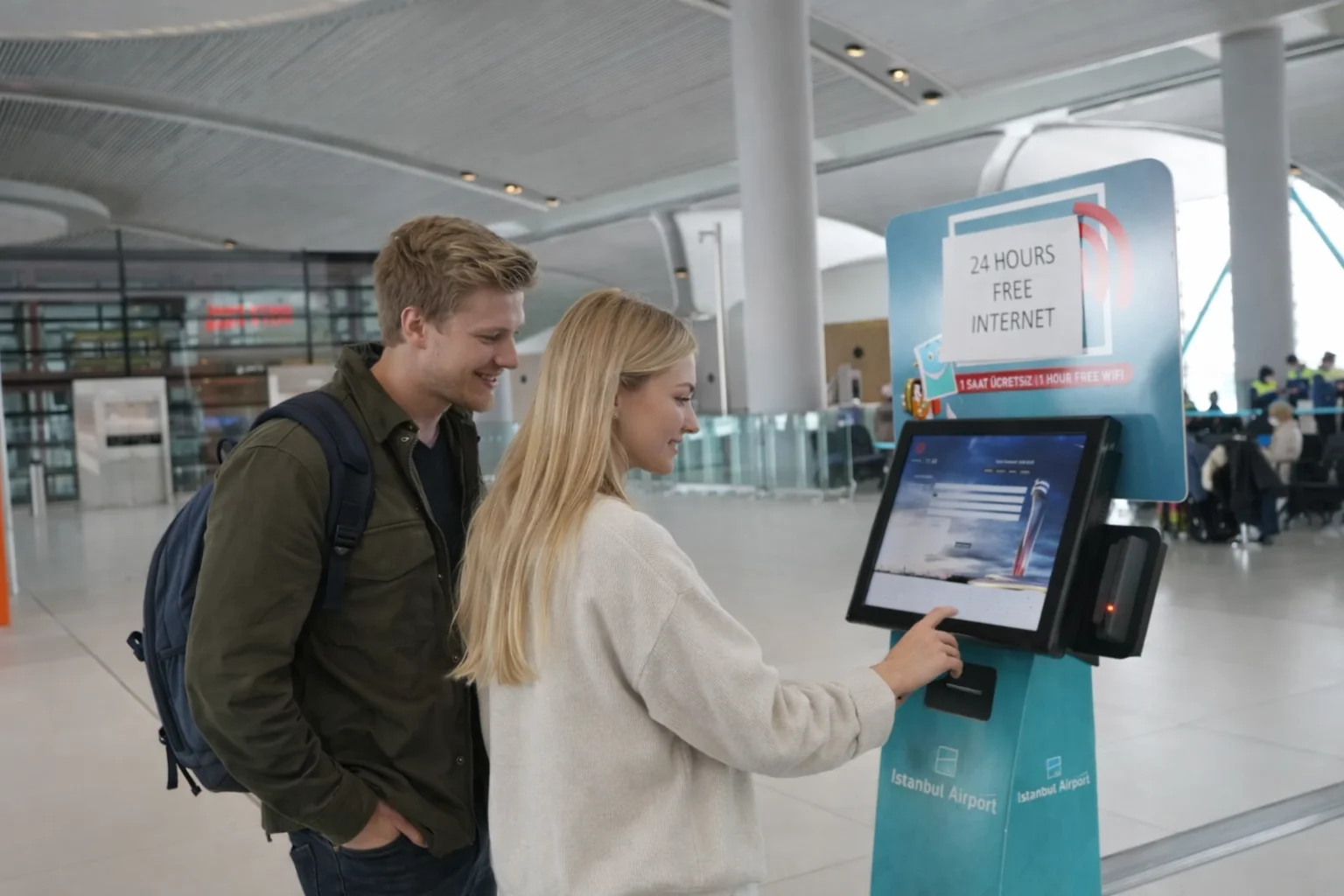
On this page
A 44-year-old Perth man carried a portable device called a Wi-Fi Pineapple in his carry-on luggage, creating fake hotspots that mimicked real airport WiFi at Perth, Melbourne, and Adelaide airports. Passengers who connected saw convincing login pages that harvested their email and social media credentials. He was sentenced to seven years and four months in November 2025, but the attack itself is trivially easy to replicate. Anyone with basic technical skills and that same cheap device could do it tomorrow at your airport.
That's the backdrop for this comparison. Airport WiFi versus cellular data through an eSIM: what are the actual trade-offs?
The Case Against Airport WiFi (As Your Only Option)
Airport WiFi isn't inherently evil. The problem is treating it as your lifeline in a foreign country.
Security is the obvious issue. Evil twin networks like the ones in Australia aren't rare. Public WiFi is one of the most common vectors for man-in-the-middle attacks, where someone intercepts data between your device and the router. Even on legitimate airport networks, unencrypted app traffic and metadata can be captured by anyone on the same connection with basic tools.
Speed is a lottery. Some airports have invested in solid infrastructure. Others haven't. And even at well-equipped airports, speeds collapse during peak travel hours when thousands of passengers fight for bandwidth. Captive portals that make you re-register every 30 minutes don't help.
Coverage ends at the door. You land, connect to WiFi, pull up your hotel address. Then you walk outside to grab a taxi and you're offline. That's the exact moment you need directions most.
The Case for eSIM
Cellular data through an eSIM solves the three problems above. Your connection is encrypted through the carrier's network, not shared with every stranger at Gate B12. Speed depends on the local cell network, not how many people are streaming Netflix in the terminal. And it works from the airport to the hotel to the restaurant to the train station.
At Only eSIM, a 1 GB plan costs $4-8 for most countries. That covers several days of maps, messaging, and light browsing.
Setup takes two minutes before your flight. Install via QR code at home, land at your destination, turn off airplane mode, and you're connected. No portal logins. No hunting for the right network name. (If you're not sure how eSIMs work, our plain-language explainer covers the basics.)

The best travel setup: eSIM data for calls and navigation, cafe WiFi for heavier downloads.
When WiFi Still Wins
We're not saying never use WiFi. Hotel WiFi with a known password is fine for streaming or large downloads. Cafe WiFi works for casual browsing. The point is: don't depend on unknown public networks as your primary connection abroad.
The best setup is both. Use an eSIM for reliable data everywhere, especially navigation and anything involving logins. Switch to trusted WiFi when you want to save your data allowance on heavier usage. Your phone handles the switching automatically.
That combination covers you from the second you land to the second you fly home. No gaps, no login pages, no wondering if the network called "Free_Airport_WiFi_Secure" is actually run by the airport.
Photo by Avi Richards on Unsplash.
Find data for your next trip
Compare coverage, data and validity before choosing your eSIM.
Browse destinationsMore for your trip
Travel Tips
eSIM for International Travel: The Complete Guide
Why eSIM is replacing pocket WiFi and airport SIM kiosks. How travel eSIMs work, data-only vs voice plans, regional vs single-country options, and what to do before you board.
Owen6 min read
Travel Tips
How Much Data Do You Actually Need When Traveling?
Practical data usage breakdown for travelers: how much data maps, messaging, social media, video calls, and streaming actually consume, plus a simple rule-of-thumb calculator for trip planning.
Owen5 min read
Destinations
France eSIM Guide: Paris Arrival, Trains, and Data Tips
A practical France eSIM guide for Paris arrival now that paper metro tickets are gone, plus SNCF train days, timed museum entry, Provence and Riviera trips, data sizing, and the France-only vs Europe plan decision.
 Gisele8 min read